Showing posts with label Artists. Show all posts

November 1, 2015

Artist Profile: Lisette Chavez

You Were Just a Baby. Lithograph. Image Courtesy of the Artist

Lisette Chavez creates haunting images and elaborate installations that explore her childhood experiences with funerals and the process of mourning, as well as the feelings of guilt associated with the Catholic ritual of confession. Through her work, Chavez "seeks to find beauty in those things which we fear and make art about what we cannot explain."

Read on to learn more about Chavez's work and influences.

View of My First Confession installation. Image Courtesy of the Artist. 

What are some of the influences on your work and artistic practice?


Some of my childhood memories have made a lasting impression on the way I perceive the world and my work. 

Most of my lithographs are from a body of work titled, Early Mourning. My mother is the youngest of thirteen children and often took me to funerals of my extended family. I was too young to understand those situations but I think I became very fascinated with the human body, mourning and death. 

As I entered my teens I was eager to discuss these topics, and I noticed how I made people uncomfortable when I’d bring them up; it bothered me. By making that body of work I was able to create a dialogue about an experience that is going to be inevitable for everyone. 


At eight years old I lied at my first confession and I’ve felt guilty about it since. In my latest installation, My First Confession, I created a shrine-like space, which detailed my experience growing up in a conservative and Catholic household. The piece was a way for me to finally confess to my viewers. It’s alluring and disturbing, but I felt that this would convey the unease between purity, seduction and evil. Some parts of it are humorous and others are not, but life is that way. 


Details from My First Confession installation. Images Courtesy of the Artist. 
What drives you as an artist? What are you passionate about that you're able to express through your art? 


I think some of us just have an innate desire to make things, no matter which medium. I can’t speak for all artists since we all have different personal experiences and artistic processes but I tend to go through phases where I obsess about specific ideas or memories. I can be at a mall, see someone’s shirt and it will trigger me back to that same idea. It’s kind of like a complicated pattern. The more pieces you find, the more that initial idea starts to make sense. Not sure why this happens but it’s happened to me all my life. 


A psychiatrist once purchased some of my work and bluntly asked me, “So what happened to you?” I didn’t know what she meant specifically but after a bit of questioning back an forth she said, “You are trying to recreate the experience.” So maybe there is a little of that in why some artists make art. 


When I create my work, it’s mostly for myself; it gives me time to reflect and meditate on my thoughts. When I feel like I’m ready to share my work with others, I do, but I also make work that I don’t show to anyone. 

It’s a great experience to be able to share your ideas with others. It’s really motivating and a transformation begins. In the beginning, I knew that the work was mostly for me but it has a great way of helping people connect with one another. It eventually becomes part of everyone else too. I think it’s really special when you get to connect with a complete stranger. 


View of Artist's Studio and Collection of Objects. Photo Courtesy of the Artist. 

Where you do find inspiration? 


I am a collector of religious art, medical ephemera and obscurities. I grew up with a ton of religious and botanical iconography in my home so it’s definitely fed some of my aesthetic. In my spare time I love going to antique stores and looking for my next treasure. 

Which artists do you admire most, and why? 


I have a huge appreciation for artists who work in themes regarding the human condition, Catholicism, as well as works that are intricate and over-the-top. Ivan Albright, Joe Coleman, Dr. Lakra and Winnie Truong are a few of my favorites. Right now I am really into a Polish painter named Aleksandra Waliszewska. Her work is unsettling but it comes from a very genuine place. To me, her imagery seems like a never-ending nightmare, one where I cannot wake up. 

Detail from My First Confession installation. Images Courtesy of the Artist. 

Chavez will be exhibiting some of her lithographs and drawings with the Lullwood Group on November 14, 2015. You can see more of Chavez's two-dimensional work and installations on her website at www.lisettechavez.com.  Instagram users can follow her @holy_press to see photos of projects in progress. 


Transience. Lithograph. Image Courtesy of the Artist.

July 15, 2015

Artist Profile: Carol Cunningham

Pop, 2014

Through her use of kitschy, yet thought-provoking imagery and installations Carol Cunningham explores the fascinating and complicated connections humans maintain with the natural world while we become increasingly more reliant on the man-made. 

Cunningham investigates our overabundance of animal-themed consumer goods in  interactive installations such as Pop and in the photographs of zoo gift shops from her Interior Fluff series. In her poignant series of limited-edition prints, White Rhino Countdown, Cunningham brings attention to the rapidly approaching extinction of the Northern White Rhino. Cunningham's most recent series, Frozen Zoo, focuses on 50 critically endangered species listed on the International Union for Conservation and Nature's Red List. 

By examining the modern obsession with synthetic mass production in light of the sobering reality of nature's decline, Cunningham's work "bring(s) awareness towards the duality of decay and re-growth."

Read on to learn more about Cunningham's work and influences. 
Pop, 2014

What are some of the influences on your work & artistic practice?
I have always been influenced by Zoo's and Pop culture. My research revolves around cabinets of curiosity and the consumer market. When I moved to San Antonio a year ago, I took a part-time job at the San Antonio Zoo. My activities there are currently the largest influence on my work and research. I'm also very influenced by the San Antonio community, from items they donate to thrift stores, to piñatas and fiesta fetishes.

What drives you as an artist? What are you passionate about that you're able to express through your art? 
I think my drive comes from an innate curiosity about animal/ human culture and a need to bring some scenarios both constructed and real to people's attention. I have always steered away from being called an animal activist because there is often a lot of negativity associated with activists. I think more fitting words to describe myself would be researcher and conservationist. I enjoy being able to sharing my discoveries.

art-carol-cunningham-texas-art
Frozen Zoo, 2015

Where you do find inspiration? 
My inspiration usually comes from the environment that I'm living in. I see Zoo's and Thrift stores as Cabinets of Curiosities with a plethora of things to discover. Pop Culture is also a big influence in my work. I'm constantly searching for those odd moments of interaction between people and animals or animal like figures.

Which artist(s) do you admire most, and why? 
Right now I am really into Mark Dion's installations and Diane Fox's  photography work. But I'm sure it will change in a few months. I love both of their work for different reasons. Dion's  work is all about the installation, cabinets of curiosity, and the found object. Where Fox's is about the interaction occurring between the viewer and taxidermy animals in museums.

art-carol-cunningham-texas-art
Teddy Bear Garden, 2013

Carol Cunningham is an adjunct professor at the Art Institute of San Antonio and co-Director of Clamp Light Artist Studios and Gallery.  In February 2016, Cunningham's work will be featured in Abilene, Texas at the Center for Contemporary Art. That exhibition will focus on bears, hibernation, and spring. You can see more of Cunningham's work by visiting her website, www.carolcunninghamart.com.


June 21, 2015

Lesley Dill: Performance as Art

Paper Poetry Scroll Suit from Divide the Light "Banish air from air - divide light if you dare." Emily Dickinson
The McNay Art Museum is currently hosting an exhibition that showcases the performance work of Contemporary artist, Lesley Dill. The costumes on display were used in the numerous performance projects that Dill has conceived and performed over the past twenty years. A large part of the exhibition includes the costumes for Divide Lightthe full-scale opera that Dill wrote and directed in 2008. Dill's work examines the relationship between the human body and the written word, and she specifically incorporates the poems of Emily Dickinson into these pieces.

Even when viewed on their own, outside of the context of the performance, the garments are quite evocative. The Paper Poetry Scroll Suit from Divide Light was constructed of book pages onto which Dill then painted the lines from the poem. Other dresses have cascading scrolls of fabric, or dramatic trains with words embroidered on them. They are enigmatic, haunting, and even with their theatricality, there is a sense of vulnerability exuded from these garments.

The exhibition includes excerpts from the performances in which these costumes were used, and it adds a whole other dynamic to the work, as they are brought to life in the performances and can be appreciated in the context they were created for. 

Lesley Dill: Performance as Art is on view at the McNay Art Museum until September 6, 2015. 

Detail of Paper Poetry Scroll Suit from Divide Light

To Be Alive is Power (Apron Dress) from Divide Light 
Dada Poem Wedding Dress, 1994
Red Thread Fall, 2003 "Take all away from me, but leave me ecstasy." Emily Dickinson 

June 3, 2015

Artist Profile: Sarah Fox

Swan God, 2014. Image Courtesy of the Artist. 

I was immediately drawn to Sarah Fox's work because of her brilliant use of collage and her dynamic, layered compositions. She uses images gathered from books, magazines, and the internet to construct an array of peculiar creatures that she describes as "'others,' those outsiders that don't fit within the clear boundaries of our world."

Fox draws inspiration from artists like Hannah Höch, the pioneering feminist artist who used collage in the early 1920s to critique not only the German government, but also the ideals of femininity and glorified domesticity of the time period.  With her collages, Fox's reconfigured beings inhabit their own peculiar worlds and express a beauty ideal all their own. 

Read on to learn more about Fox's work, what she's inspired by, and what she's working on next.

Frog: Poor Thing (left) and Well what about Stacy, she seems light such a nice girl? (right), 2014. Images courtesy of the Artist.

What drives you as an artist? What are you passionate about that you're able to express through your art?  
I'm a passionate feminist and really believe in women being present and vocal in our world. I think speaking my mind through my work is a big part of my drive.

Where you do find inspiration? 
I am constantly looking at art. I try to go to as many shows as my schedule allows and from the visual imagery I see at all these shows and online. Subject matter wise, I am always doing research into what more work is exploring. For a while it was reading a lot of mythologies and Joseph Campbell. Currently, I've been researching adolescence, and our relationship to our body at the time of change. Specifically with children who may be a bit different. 

Which artists do you admire most, and why? 
I love the drawings of Egon Schiele. I don't know anyone who can draw better and with more power than he could at such a young age. Wangechi Mutu's work is also very important to me. I could stare at her pieces for hours. The subject matter is often very violent and dark, they often speak to a sort of bodily violence. But, she works with this dark subject matter in such a strange and beautiful way. She is also an incredibly beautiful and intelligent woman, a big inspiration me. Other artists whose work I just love are Pipilotti Rist, David Altmejd, Kiki Smith, Kara Walker, Joseph Cornell, and Trenton Doyle Hancock. They are all dealing with the figure in art, but doing it in a way that deconstructs the body, or changes the body into something other, something more.

Song for Sister: Everything will be okay, 2014. Image courtesy of the Artist. 

Sarah Fox is currently an MFA candidate at the University of Texas at San Antonio. Her thesis exhibition is planned for December 2015. She will also be part of the Texas Artist Connection group exhibition at the Carver Center this August. You see more of Fox's work at AnArte Gallery or by visiting her website, www.sarahfoxart.com.

January 6, 2014

Vivian Maier


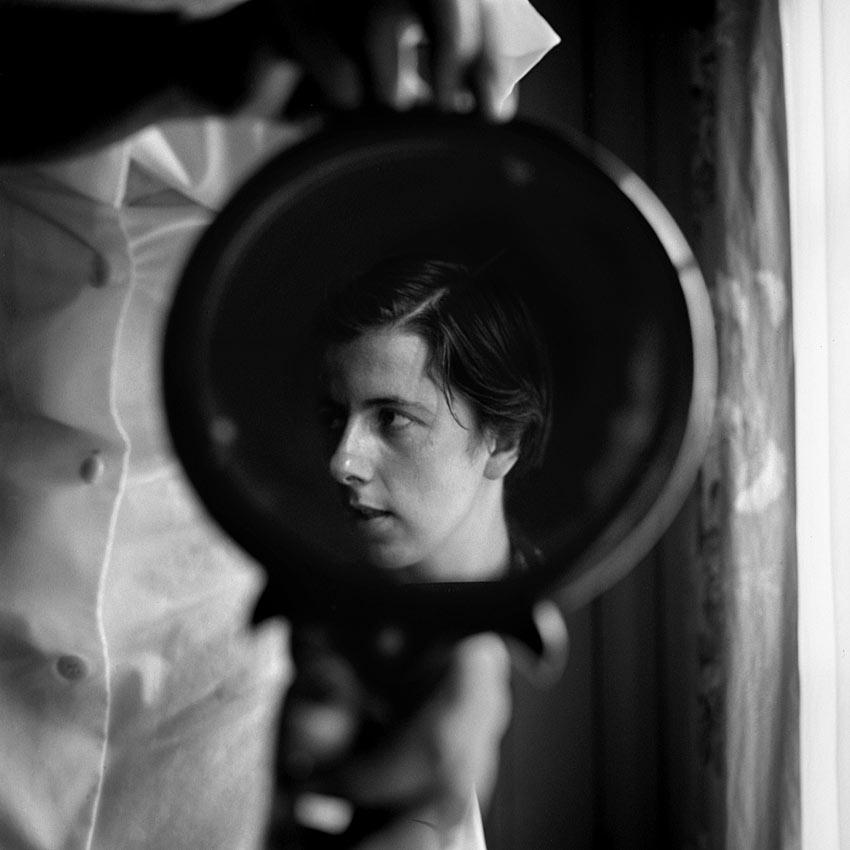
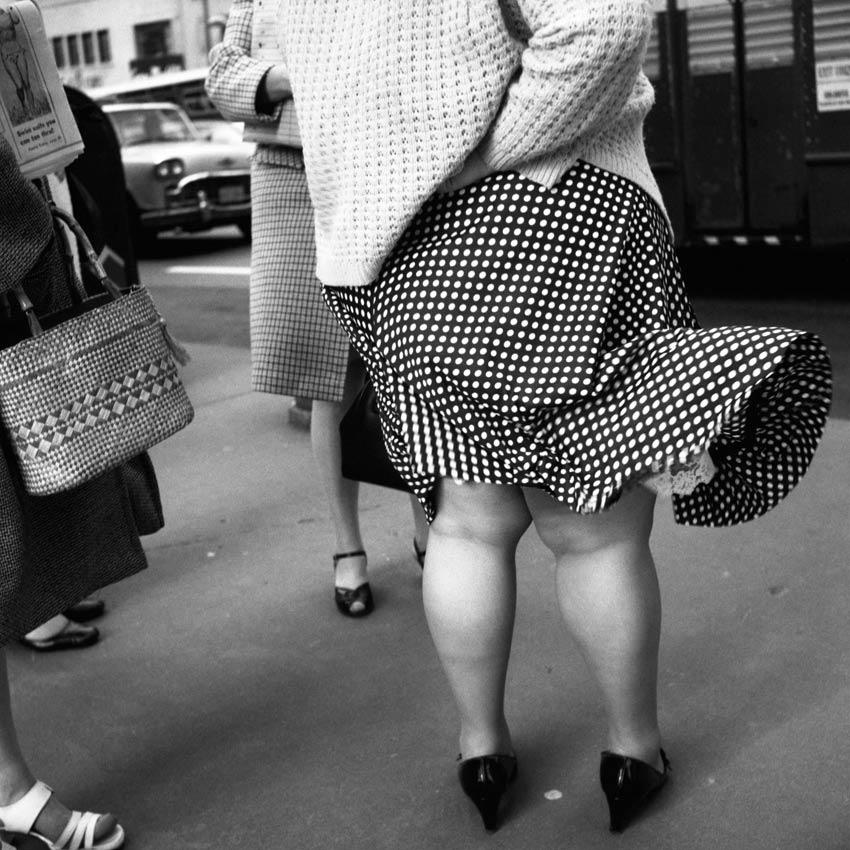
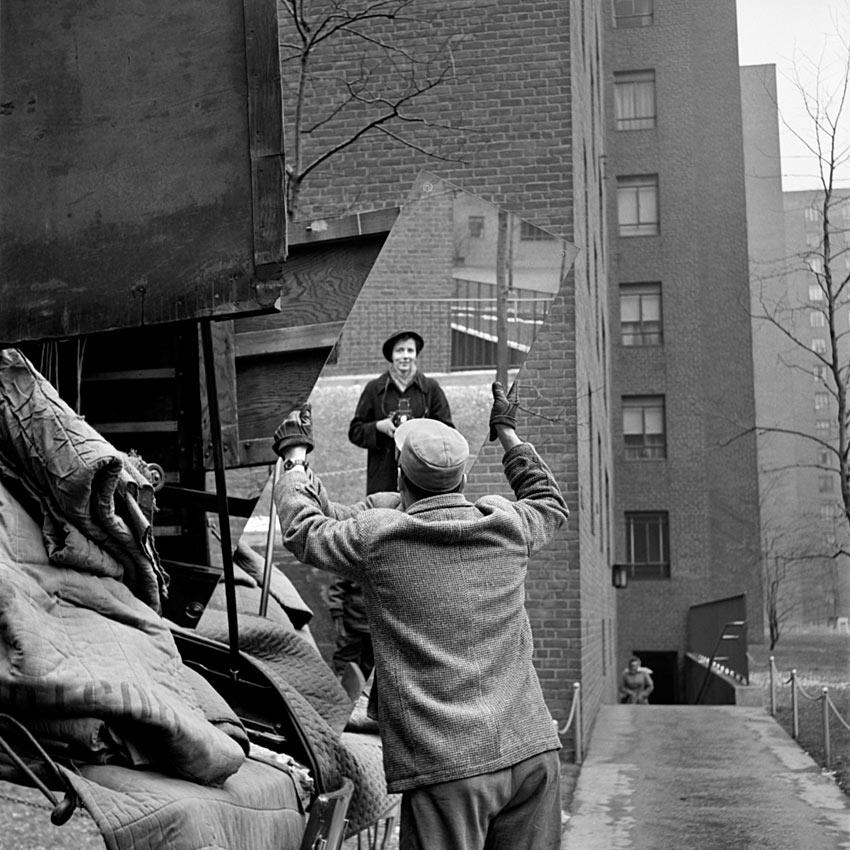
I’ve been fascinated by Vivian Maier’s work and life, much like everyone else, since it was first made public.  The thousands of photographs she took throughout her solitary life - the street photography, the portraits, the self- portraits - are all so intimate and immediate, highlighting those ephemeral moments that are often overlooked.

Self-Portrait, 1955

Today, with Instagram, digital cameras, and blogging, the urge to document and photograph the minuate of everyday life is not uncommon, and often, the urge to document is coupled with an even stronger urge to share.  What’s really intriguing about Vivian is that she documented these moments only for herself. As far as we can surmise, these photographs were not to be seen by anyone.  In her later years, as costs of film and developing increased, she left hundreds of rolls undeveloped. 

May 27, 1970, Chicago, IL

One question people keep asking about her work is why?  Why did she photograph so much? Why didn’t she show this to anyone?  Why was she so obsessed with keeping this to herself?  Even the people closest to her (and there was practically no one), had no idea.  
There’s no way to ever really know what her intent was.  

Looking at her work in the context of today’s obsession with sharing, it’s easy to think that she was ahead of her time.  It’s also easy to assume that she needed to share this work.  The truth is she didn’t.  The sole act of taking the photos must have been enough for her.  Knowing that she had documented that moment, or that peculiar looking passerby, or the play of light on the sidewalk, or her own image in a store front was all she needed.  She didn’t need validation or acceptance from anyone.  There were no galleries or clients to please. There were no “likes” or comments to rack up.  There was no money to be made from these images.

Self-Portrait, February 1955

Decades later, we get to experience these photos, and we’re lucky.  We’re lucky that she took them.  We’re lucky that she didn’t share them, because perhaps they would not have been so personal, so honest, so immediate.  Perhaps the approval, or lack there of, would have changed her intentions or her motivation.

As much as I love her work and understand the importance of it, part of me feels guilty for seeing it.  It was hers.  Her privacy was so important to her that she often didn’t tell people her real name. I’m sure she had her reasons for taking all of those photos, and perhaps, they are none of our business.

Nonetheless, I am inspired by her work. I'm fascinated by the moments she noticed, by the attention to details, and by the way she loved to capture light and shadows.  But most of all, I'm inspired by the dedication she had to create and document, even if only ever for herself.


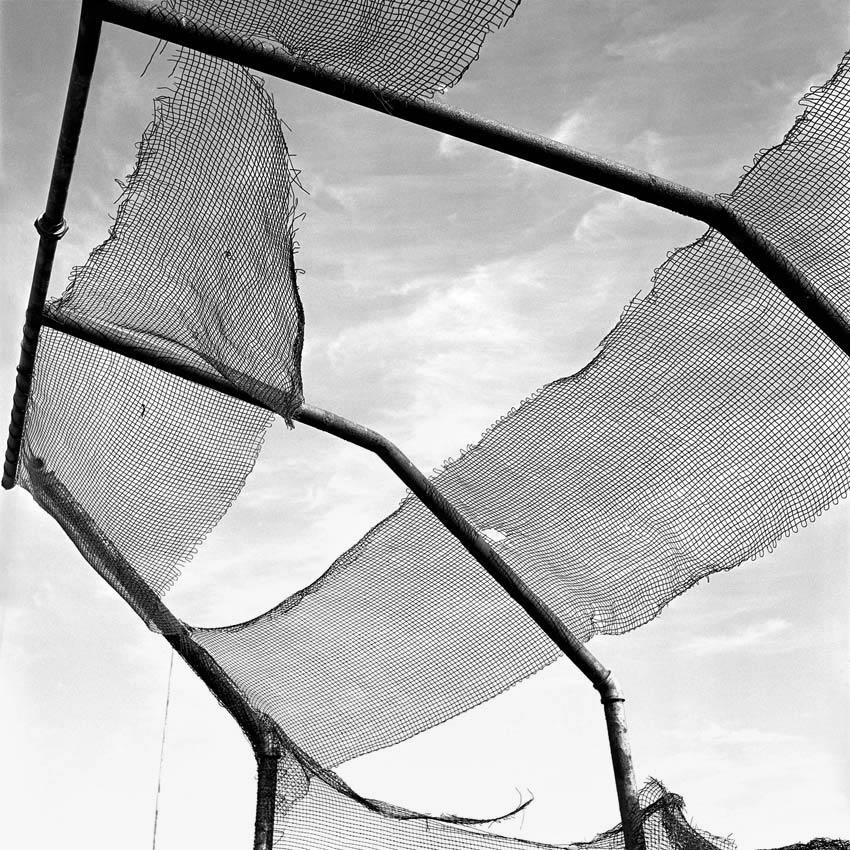
Untitled, Undated

If you haven’t experienced her work, please view:  Vivian Maier Photographer  

I haven't done a search for academic research on her work yet, but there are a few short articles here, and one really good one that briefly discusses the problematic aspect of gaining academic recognition for her work:  
"There’s no denying that our understanding of Maier is missing key curatorial and aesthetic pieces that are important to our understanding of photographic artists. We don’t know how she would have edited her work for display or how she would have chosen to print her photos. Nevertheless, the strength of the negatives is hard to deny."
I’m really excited for the documentary. There are some beautiful books of her work available: Vivan Maier: Street Photographer, Out of the Shadowsand Vivian Maier: Self-Portraits.

All of the photos used in this post are from the Vivian Maier Official website.